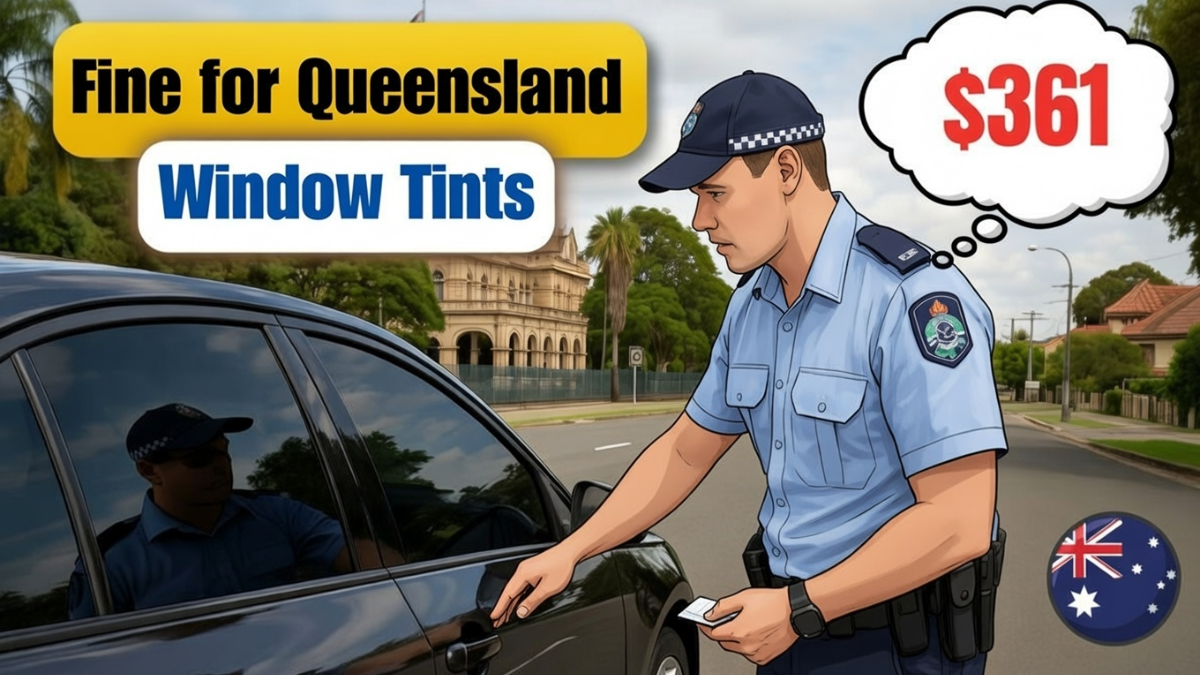
Queensland motorists are being warned to check their vehicle window tints ahead of a major enforcement push beginning October 2026. Under updated compliance checks, drivers found with illegally dark window tints could face fines of up to $361, along with potential defect notices requiring immediate correction. Authorities say the move is aimed at improving road safety and visibility, but many drivers may be unaware their current tint already exceeds legal limits.
With penalties confirmed and enforcement set to intensify, understanding the rules has become essential for Queensland drivers.
Why Queensland Is Cracking Down on Dark Window Tints
Transport authorities say excessively dark window tints reduce visibility for drivers, particularly at night and during poor weather. Dark tints can also make it harder for police to see inside vehicles during roadside stops, raising safety concerns for both officers and motorists.
The enforcement initiative is being rolled out under state road safety priorities supported by the Queensland Government, with a focus on consistent compliance rather than warnings alone.

What Counts as an Illegal Window Tint in Queensland
Queensland law sets clear limits on how dark vehicle window tints can be. Windscreens must allow a high level of visible light transmission, while side and rear windows also have minimum transparency requirements.
Any tint that falls below the legal visible light transmission threshold is considered illegal, even if it was installed years ago or came fitted at purchase. Many aftermarket tints, especially older or cheaply installed films, are now failing modern compliance checks.
Drivers are often surprised to learn that a tint that looks normal in daylight may still be illegal under testing equipment.
What Changes From October 2026
From October 2026, roadside enforcement will increase significantly across Queensland. Police and transport inspectors will use calibrated light meters to test window tints during random stops and vehicle inspections.

If a vehicle fails the test, drivers may receive an on-the-spot fine of up to $361. In some cases, a defect notice may also be issued, requiring the tint to be removed or replaced before the vehicle can be legally driven again.
Repeat offences or refusal to comply may lead to harsher penalties.
Will All Drivers Be Checked
Not every driver will be stopped, but enforcement will be widespread. Checks are expected to be common during routine traffic stops, random breath testing operations, and roadside safety campaigns.
Vehicles with visibly dark windows are more likely to be targeted. Modified cars and older vehicles with aftermarket tints may also attract closer inspection.

Authorities say the goal is deterrence through consistency, not surprise enforcement.
Common Myths About Window Tint Laws
One common misconception is that factory-installed tints are always legal. While many factory tints comply with regulations, modifications or added films can push them over the legal limit.
Another myth is that medical exemptions apply automatically. While limited exemptions may exist, they require proper documentation and approval. Simply claiming sensitivity to light is not enough to avoid penalties.
Drivers are responsible for ensuring their vehicle remains compliant at all times.

How Drivers Can Avoid the $361 Fine
The safest option is to have window tints tested by a licensed installer or inspection service before October 2026. Many tinting businesses offer compliance checks and can advise whether removal or replacement is necessary.
If unsure, replacing overly dark tint with a legal alternative is far cheaper than paying fines, dealing with defect notices, and risking insurance issues after an accident.
Keeping proof of compliant installation may also help during inspections.
Insurance and Safety Implications
Driving with illegal window tints can have consequences beyond fines. In the event of an accident, insurers may question vehicle compliance, which could complicate claims.

Authorities also stress that legal tints improve night-time driving safety, pedestrian detection, and overall reaction time, especially in low-light conditions.
Conclusion
Queensland drivers face a clear warning ahead of October 2026. Illegal dark window tints can now result in fines of up to $361, along with defect notices and added inconvenience. As enforcement increases, checking and correcting window tint compliance early is the smartest move. Staying informed and proactive can save money, protect your licence, and improve road safety for everyone.
Disclaimer: This article is for informational purposes only and does not constitute legal or automotive advice.
