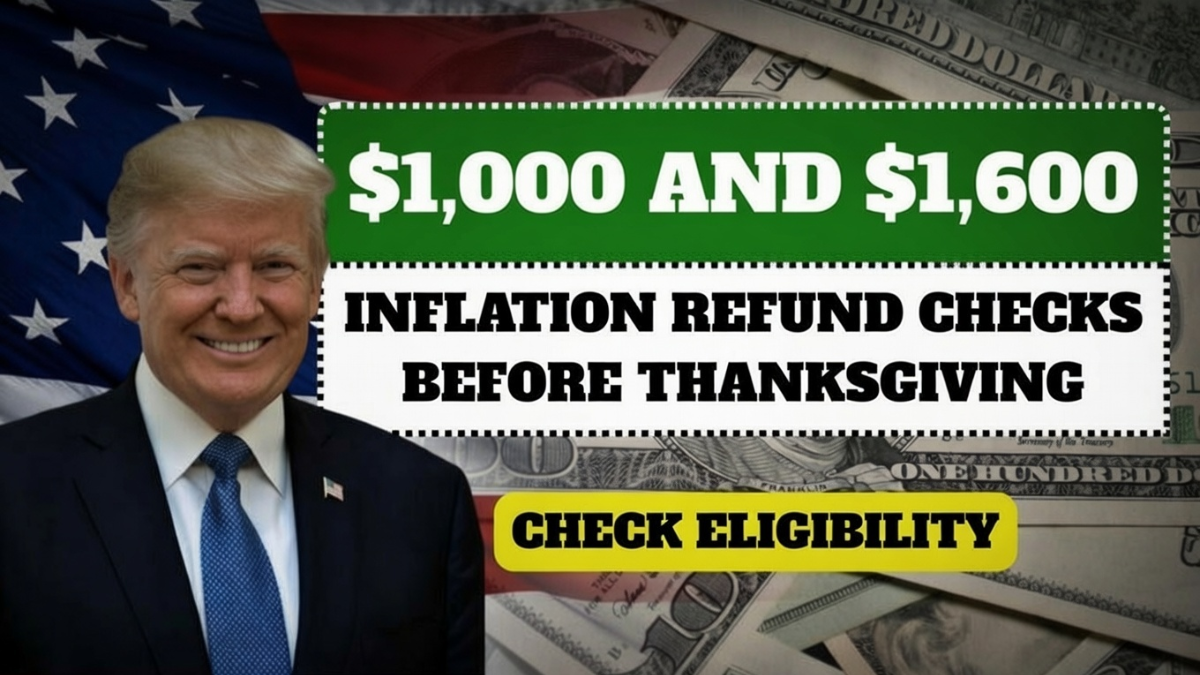
Reports of new $1,000 and $1,600 inflation refund checks arriving before Thanksgiving have created a surge of excitement across the United States. With grocery prices, rent, utilities, and insurance costs still straining household budgets, many Americans are hoping for direct financial relief just ahead of the holiday season. However, the reality behind these inflation refund checks is more nuanced than viral headlines suggest.
This article explains what these inflation refund checks really are, who may qualify, how payments work, and why not everyone should expect a check.
What Are the $1,000 and $1,600 Inflation Refund Checks
The so called inflation refund checks are not a single nationwide federal stimulus program. Instead, they refer to a mix of state level relief payments, tax refunds, surplus rebates, and targeted assistance programs designed to offset the impact of inflation.
Unlike earlier pandemic era stimulus checks, these payments are not being issued automatically by the federal government. Many are tied to state budget surpluses, tax filings, or specific eligibility categories. Some payments are labeled as inflation relief, while others are officially classified as tax rebates or refunds.

Why Thanksgiving Timing Is Getting Attention
The timing before Thanksgiving has drawn attention because several states traditionally issue refunds or rebates in the fall, especially after completing tax processing or finalizing surplus budgets. With inflation still affecting consumer spending, lawmakers in certain states have accelerated or highlighted relief payments ahead of the holiday shopping season.
This timing has led to confusion, with many assuming that a nationwide $1,000 or $1,600 check is being issued to all Americans, which is not the case.
Who May Be Eligible for These Payments
Eligibility varies widely depending on the program and the state issuing the payment. In most cases, eligibility is tied to income thresholds, filing status, residency requirements, and whether a taxpayer filed a recent tax return.
Typical eligibility factors include income below a certain limit, filing a state tax return for the previous year, being a full time resident during the qualifying period, and not being claimed as a dependent. Some programs also prioritize families with children, seniors, or low to middle income households.
Difference Between $1,000 and $1,600 Payments
The difference between $1,000 and $1,600 usually depends on filing status or household size. For example, single filers may qualify for a lower amount, while married couples filing jointly or families with dependents may receive higher payments.
In some programs, $1,000 applies to individuals and $1,600 applies to joint filers. In others, the higher amount may include additional credits per dependent or household member.
How Payments Are Issued
Most inflation related refunds are issued in the same way as tax refunds. This means direct deposit is the fastest method for those who provided bank details on their tax returns. Others may receive paper checks mailed to their address on file.
Payments are typically handled through state revenue departments or tax agencies rather than the Internal Revenue Service, which adds to the confusion. If your state is administering the program, federal tax agencies are usually not involved.

Why Many People Will Not Receive a Check
Despite the large dollar amounts mentioned in headlines, many Americans will not receive any inflation refund payment. Some may earn above the income cutoff, others may not have filed a qualifying tax return, and some states are not offering any inflation related refunds at all.
Additionally, individuals who moved out of state, changed filing status, or were claimed as dependents may be excluded even if they experienced inflation pressures.
Are These Payments Taxable
In most cases, state issued inflation refunds or rebates are not considered taxable income at the federal level, but this can vary depending on how the payment is classified. Some refunds may be treated as a return of taxes paid, while others may be considered income.
State tax treatment can also differ, making it important for recipients to review official guidance before assuming the payment is tax free.

How to Check If You Qualify
The most reliable way to determine eligibility is to check official announcements from your state’s revenue or treasury department. Many states provide online tools that allow residents to check payment status using basic personal information.
Relying on social media posts or generalized headlines can lead to false expectations, as eligibility rules are highly specific.
Conclusion
The $1,000 and $1,600 inflation refund checks before Thanksgiving are real for some Americans, but they are not universal payments. These refunds depend on state programs, income limits, filing status, and residency rules. While the timing offers potential holiday season relief, many households may not qualify. Staying informed through official state sources is the best way to understand whether a payment is coming and how much to expect.
Disclaimer: This article is for informational purposes only and does not constitute financial or tax advice.