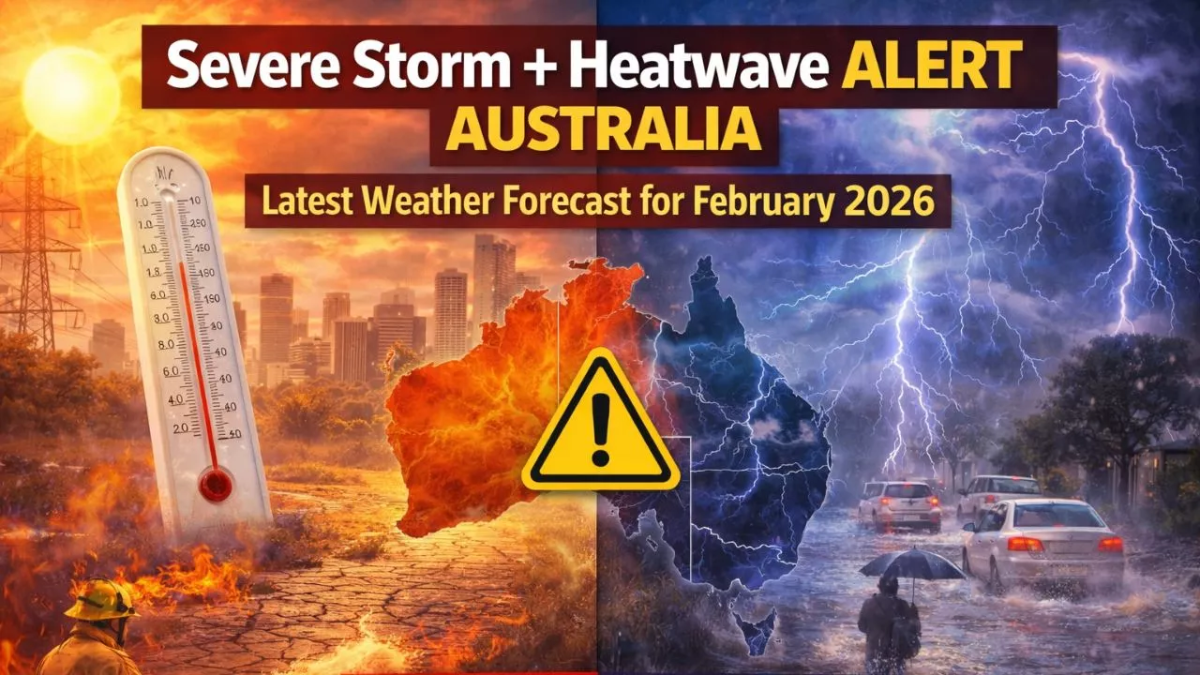
Australia is facing a volatile weather pattern in February 2026, with severe storms and an intense heatwave expected to impact multiple regions simultaneously. Meteorologists are warning that the combination of extreme heat, humidity, and unstable atmospheric conditions could lead to dangerous weather events over the coming weeks.
The latest outlook has been issued based on national monitoring and modelling by the Bureau of Meteorology. Australians are being urged to stay alert, especially in areas prone to heat stress, flash flooding, and severe thunderstorms.
Why February 2026 Weather Conditions Are Becoming Extreme
February is traditionally one of Australia’s hottest months, but 2026 is seeing stronger than usual heat systems interacting with moisture laden air masses. Prolonged high pressure systems are trapping heat, while tropical moisture is feeding storm development across several states.
This combination increases the risk of heatwaves followed by sudden storm outbreaks, creating challenging and unpredictable conditions.
Heatwave Forecast: Regions Most at Risk
Large parts of Australia are forecast to experience prolonged periods of above average temperatures. Inland areas, western regions, and parts of the south are particularly vulnerable to extended heatwaves.

Daytime temperatures are expected to remain high, with limited overnight cooling in some locations. This raises health risks, especially for older Australians, young children, and those with medical conditions.
Severe Storm Threats Expected to Increase
As hot air interacts with incoming moisture, severe thunderstorms are likely to develop. These storms may bring damaging winds, heavy rainfall, lightning, and isolated hail.
Flash flooding is a concern in urban and low lying areas where intense rainfall can overwhelm drainage systems in a short time.
Impact on Major Cities and Regional Areas
Capital cities may experience sharp temperature spikes followed by sudden storm activity, particularly during late afternoons and evenings. Regional communities could face more prolonged exposure to extreme heat and storm damage due to limited cooling and infrastructure challenges.
Rural and agricultural areas should also prepare for possible crop stress, livestock heat exposure, and storm related disruptions.

Health and Safety Risks During Heatwave Conditions
Extreme heat can cause dehydration, heat exhaustion, and heatstroke. Power demand often increases during heatwaves, raising the risk of outages which can worsen conditions indoors.
Australians are advised to stay hydrated, avoid outdoor activity during peak heat, and check on vulnerable family members and neighbours.
Storm Related Hazards to Watch For
Severe storms can lead to falling trees, power line damage, and road hazards. Sudden downpours increase the risk of flash flooding, particularly in storm drains, underpasses, and creeks.
Motorists should avoid driving through floodwaters and remain cautious during rapidly changing weather conditions.
How Long This Weather Pattern May Last
Current forecasts suggest the heatwave and storm risk could persist through much of February 2026, with fluctuations in intensity depending on regional conditions.

While short breaks may occur, overall temperatures are expected to remain above average, keeping storm potential elevated.
What Australians Should Do to Prepare
Households should prepare by ensuring access to cooling, drinking water, and emergency supplies. Securing loose outdoor items and checking drainage around homes can reduce storm damage.
Staying informed through official weather warnings and updates is critical during this period.
Travel, Events, and Outdoor Activity Considerations
Extreme heat and storms may disrupt travel plans, outdoor events, and school or community activities. Organisers and travellers should remain flexible and monitor conditions closely.
Employers may also need to adjust outdoor work schedules to protect worker safety.

Why Staying Updated Is Essential in February 2026
Weather conditions can change rapidly during extreme events. Timely warnings help reduce risk and allow people to take protective action before conditions worsen.
Relying on verified forecasts rather than social media speculation ensures accurate and timely information.
Conclusion
The severe storm and heatwave alert for Australia in February 2026 highlights a challenging weather period ahead. With extreme heat, heightened storm risk, and potential disruptions across the country, preparedness and awareness are essential. By staying informed, taking sensible precautions, and responding promptly to warnings, Australians can reduce risks and protect health, property, and community safety during this intense weather phase.
Disclaimer: This article is for informational purposes only. Weather conditions can change rapidly. Always follow official warnings and advice from Australian weather authorities.