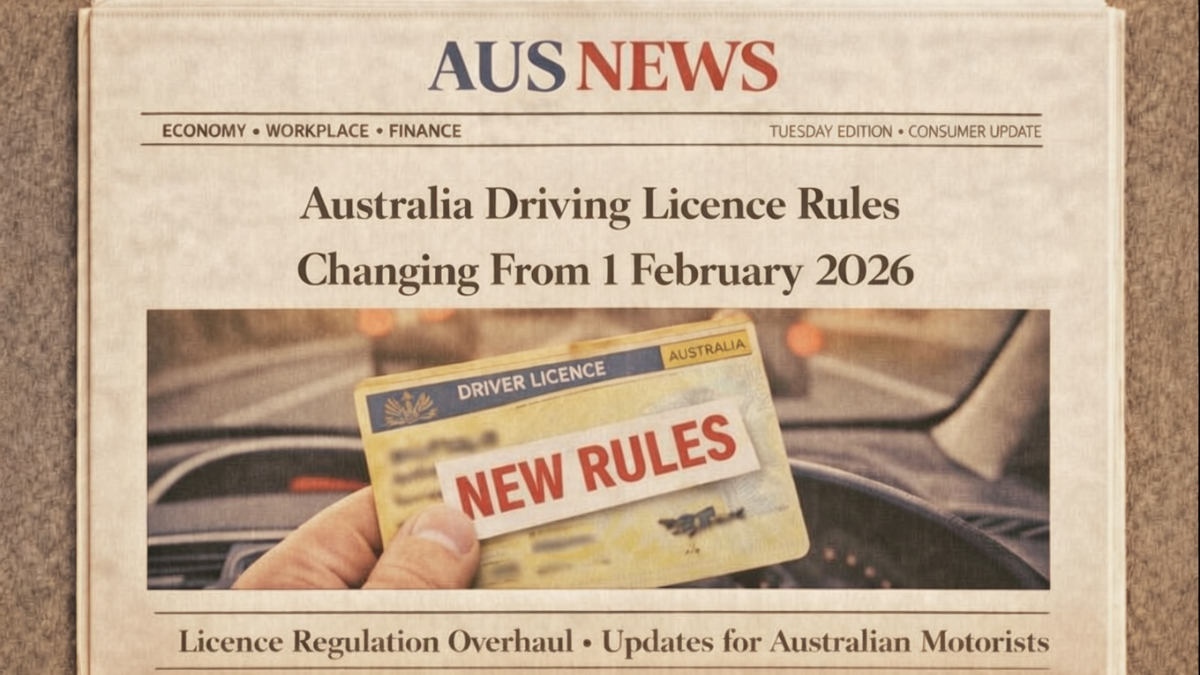
Australia is set to introduce important driving licence rule changes from 1 February 2026, affecting motorists across all states and territories. While licences continue to be issued and managed at the state level, the new update reflects a nationally aligned approach focused on safety, digital verification, and clearer renewal standards. Drivers of all ages should understand what is changing to avoid delays, penalties, or licence issues after the new rules take effect.
The changes are being rolled out in coordination with national transport and safety frameworks, with implementation handled by state and territory transport authorities under broader policy guidance.
Why Driving Licence Rules Are Being Updated in 2026
Australia’s driving environment has changed significantly due to higher traffic volumes, an ageing population, and increased use of digital systems. Existing licence processes were no longer fully suited to modern road safety needs or identity verification standards.
The 2026 update aims to improve consistency across jurisdictions, strengthen licence integrity, and ensure drivers on Australian roads remain fit, verified, and properly recorded.
Who Will Be Affected by the New Rules
The changes apply to most licence holders, including private drivers, senior motorists, learner drivers, and commercial licence holders. The level of impact will vary depending on age, licence type, and individual circumstances.

While some drivers may only notice minor administrative changes, others may be required to meet updated assessment or verification requirements at renewal.
What Changes From 1 February 2026
From the effective date, licence renewals will involve stronger identity checks and updated eligibility confirmation. Automatic renewals without review will be reduced, particularly for higher risk categories such as senior and commercial drivers.
Greater emphasis will be placed on keeping personal records current, including address details, medical declarations where required, and licence conditions.
Medical and Fitness to Drive Requirements
Medical fitness to drive will receive closer attention under the new rules. Drivers with certain medical conditions, and older drivers in specific age groups, may need to complete health assessments to confirm ongoing fitness to drive.
These checks are designed to be preventative and targeted, not universal driving tests for all motorists.

Digital Licence and Verification Changes
Digital licence systems will play a larger role from 2026. More states will rely on digital licences for verification alongside physical cards, improving real time checks and reducing misuse.
Drivers may be encouraged to ensure digital licence access is set up correctly to avoid inconvenience during enforcement or renewal.
Impact on Licence Renewals and Transfers
Renewals may require additional confirmation steps, especially for licences that have not been updated for several years. Interstate licence transfers are expected to follow clearer but more thorough processes to ensure one valid licence per driver nationwide.
This helps reduce duplicate records and administrative errors.
Penalties for Non Compliance
Drivers who fail to meet updated renewal or verification requirements may face delays, temporary suspension, or penalties depending on the situation. Authorities are expected to focus on awareness initially, but enforcement applies once the rules are active.

Keeping licence details accurate is the simplest way to avoid issues.
What Drivers Should Do Before February 2026
Drivers should check their licence expiry date, review personal details, and update any changes early. Those with medical conditions should discuss fitness to drive requirements with their doctor before renewal.
Setting up digital licence access where available and monitoring renewal notices will help ensure a smooth transition.
Common Misunderstandings About the New Rules
A common misconception is that all drivers must retake a driving test. This is not the case. The changes focus on verification, fitness, and administration rather than mass retesting.
Another myth is that physical licences will be abolished. Physical cards will remain valid, with digital licences acting as an additional option.

How the Changes Improve Road Safety
By strengthening verification and ensuring drivers remain medically fit, the new rules help reduce preventable accidents and improve confidence in the licensing system.
The nationally aligned approach also makes it easier for drivers moving between states to understand and comply with requirements.
Conclusion
The Australia driving licence rule changes from 1 February 2026 mark a significant update that every driver should be aware of. While most motorists will experience smoother, more secure licence management, preparation is essential to avoid disruption. By checking licence details, understanding new requirements, and staying informed, drivers can adapt confidently to the updated system while supporting safer roads nationwide.
Disclaimer: This article is for informational purposes only. Driving licence rules and requirements may vary by state or territory and are subject to official transport authority notifications and individual circumstances.