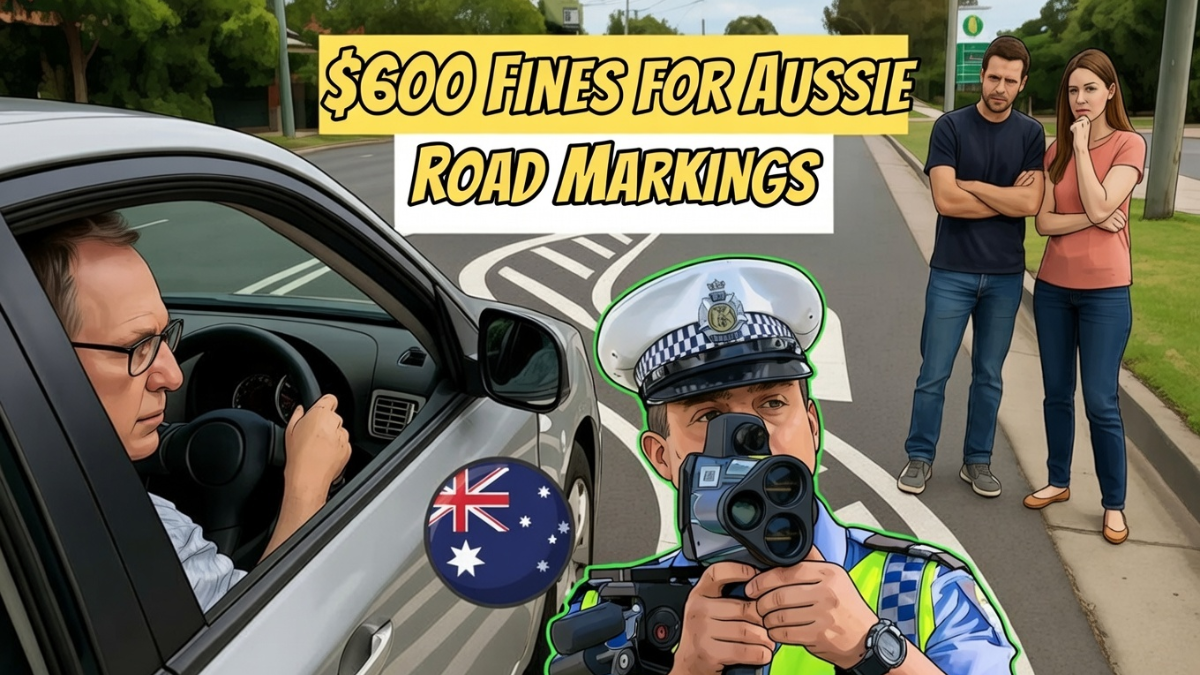
Australian drivers are facing fresh confusion on the roads as new road markings begin appearing across multiple states. While transport authorities say the changes are designed to improve safety and traffic flow, many motorists admit they do not fully understand what the markings mean. The concern is growing because misreading these markings is not just a minor mistake. It could result in fines of up to $600 and demerit points.
As enforcement ramps up, understanding these new markings has become essential for everyday drivers.
Why New Road Markings Are Being Introduced in Australia
The new markings are part of a broader road safety and traffic efficiency strategy supported by the Australian Government and implemented by state transport authorities. Officials say changing traffic conditions, increased congestion, and accident data have shown the need for clearer lane control and safer intersections.
These markings are designed to reduce dangerous lane changes, improve priority awareness, and protect vulnerable road users such as cyclists and pedestrians.

Which Road Markings Are Confusing Drivers the Most
One of the most misunderstood changes involves new lane separation markings that look similar to traditional lines but carry different rules. Some markings indicate restricted lanes, priority-only zones, or no-entry sections during specific hours.
Drivers are also confused by updated intersection markings that replace traditional signs with painted road instructions. In many cases, motorists assume the markings are optional guidance rather than enforceable rules.
Authorities warn that treating these markings as suggestions is a costly mistake.
Why Misreading These Markings Can Lead to Heavy Fines
Unlike older advisory road paint, the new markings carry the same legal force as road signs. Ignoring them can result in penalties similar to running a red light or ignoring a no-entry sign.

In several states, fines for incorrectly using restricted lanes or crossing prohibited markings can reach $600, depending on the offence and location. Demerit points may also apply, increasing the long-term impact on a driver’s licence.
Officials stress that ignorance of the marking is not considered a valid defence.
Where Drivers Are Most Likely to Encounter the New Markings
The new road markings are being rolled out gradually but are already common in busy urban areas. Drivers are most likely to see them near major intersections, school zones, bus corridors, cycling routes, and high-traffic commuter roads.
Because the rollout is not uniform nationwide, drivers travelling between states or councils may encounter markings they have never seen before, increasing the risk of unintentional violations.

What Transport Authorities Are Saying
Transport officials argue that the markings are clearer and more visible than traditional signage, especially in high-traffic zones where signs can be overlooked. They say painted instructions placed directly on the road improve compliance once drivers become familiar with them.
Authorities also confirm that enforcement is active, not just educational. While some warning periods may apply in limited areas, fines are already being issued where rules are clearly breached.
Common Mistakes Drivers Are Making
Many drivers mistakenly cross solid painted areas believing they are similar to broken lane lines. Others enter restricted lanes thinking they are standard turning lanes. Some motorists ignore painted instructions entirely, focusing only on roadside signs.
These errors are especially common during peak traffic when drivers are reacting quickly and following surrounding vehicles without checking road markings carefully.

How Drivers Can Avoid Costly Penalties
Drivers are being urged to slow down slightly in unfamiliar areas and actively read road surfaces, not just signs. Refreshing knowledge of updated road rules and markings through official transport guides can also reduce risk.
Paying attention to painted arrows, solid blocks, and coloured lanes is now just as important as watching traffic lights.
Why This Matters More in 2026 and Beyond
With increasing use of smart traffic systems and urban redesign, road markings are expected to play a bigger role in directing vehicles. Authorities see them as a key tool in reducing accidents without installing excessive signage.
As these markings become standard, drivers who fail to adapt may face repeated fines and licence consequences.

Conclusion
New Australian road markings are already catching drivers off guard, and misreading them can lead to fines of up to $600. While the changes are intended to improve safety, the lack of familiarity has created real risks for motorists. As enforcement continues, understanding and respecting these markings is no longer optional. For Australian drivers, taking a moment to read the road could save hundreds of dollars and protect their licence.
Disclaimer: This article is for informational purposes only and does not constitute legal or driving advice.
