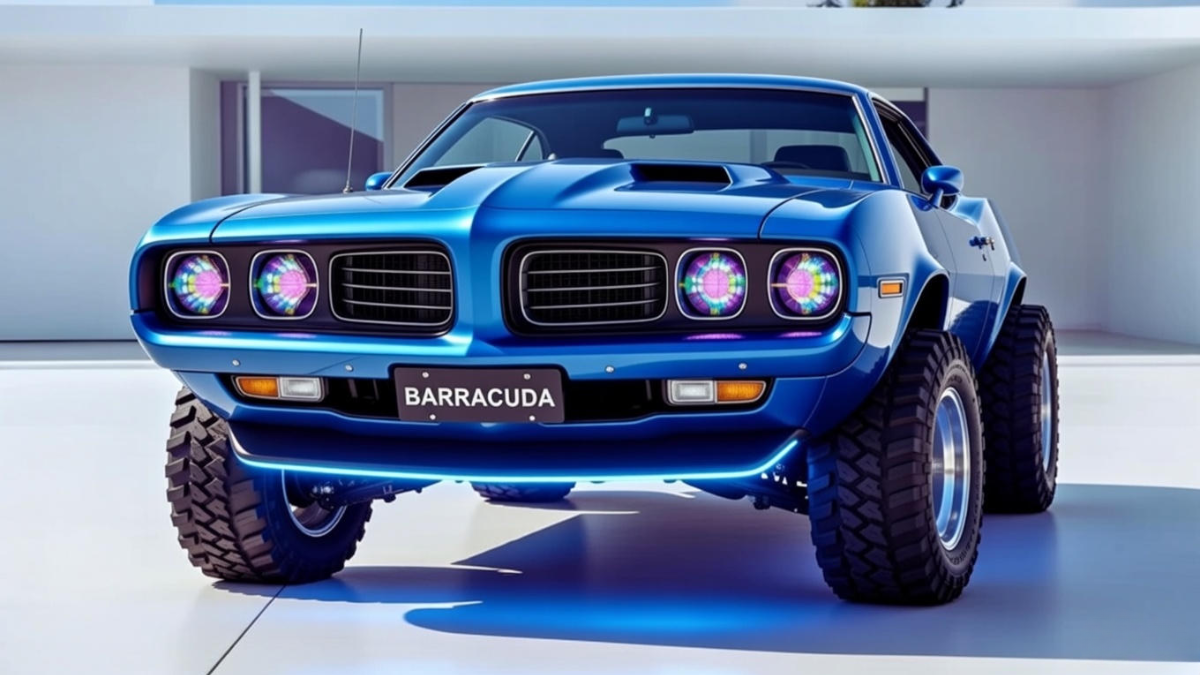
The 2026 Plymouth Barracuda has ignited massive excitement across the automotive world, reigniting conversations about one of the most legendary American muscle cars ever built. Even without an official production confirmation, the idea of a modern Barracuda revival has captured the imagination of enthusiasts, collectors, and younger performance fans alike. In a time when the automotive industry is rapidly evolving toward electrification and digital experiences, the possible return of the Barracuda represents something deeper. It symbolizes raw emotion, heritage-driven design, and the enduring appeal of true muscle car identity.
This first peek at a potential 2026 Barracuda is less about nostalgia alone and more about what muscle cars could become in a modern context. It blends history with ambition, creating a vision that feels both familiar and forward-looking.
The Barracuda Name That Shaped Muscle Car History
The Plymouth Barracuda is not just another classic car. It is a foundational name in American performance culture. First introduced in the 1960s, the Barracuda quickly established itself as a serious competitor in the emerging pony and muscle car segment. With its long hood, aggressive stance, and powerful V8 options, it became a symbol of speed, individuality, and rebellion.
High-performance variants elevated the Barracuda into legendary status, earning it a devoted following that persists decades later. For many enthusiasts, the Barracuda represents a golden era when muscle cars were unapologetically loud, powerful, and emotionally charged.
Reviving this name in 2026 carries immense expectations, making any hint of its return a major event.
A Modern Interpretation of a Classic Silhouette
Early concept previews and speculative designs of the 2026 Plymouth Barracuda suggest a respectful evolution of the original shape. The long hood and fastback profile remain central to the design language, preserving the instantly recognizable muscle car proportions.

Modern interpretations sharpen these elements with sculpted surfaces, wider fenders, and aerodynamic enhancements that reflect contemporary performance requirements. Aggressive air intakes, muscular wheel arches, and a low-slung stance signal that this is not merely a showpiece but a performance-focused machine.
The design philosophy appears to prioritize authenticity, ensuring that the Barracuda looks purposeful rather than retro for nostalgia’s sake.
Performance Vision Built for the Modern Age
While official specifications remain unconfirmed, performance expectations for the 2026 Barracuda are understandably high. Any modern revival would need to deliver serious power to live up to the legacy.
Speculation points toward a high-output internal combustion engine, potentially paired with modern performance enhancements to improve efficiency and responsiveness. Rear-wheel-drive architecture is widely expected, maintaining the traditional muscle car driving experience.
Advanced suspension tuning, performance brakes, and modern traction systems would allow the Barracuda to perform confidently not only in straight-line acceleration but also in real-world driving scenarios where control and balance matter.
The goal would be clear. Deliver thrilling performance without diluting the raw personality that made the Barracuda iconic.

Heritage Design Meets Contemporary Technology
One of the most compelling aspects of the 2026 Barracuda concept is how it blends heritage cues with modern design elements. Signature muscle car features such as bold front styling and wide rear proportions are reinterpreted through modern materials and lighting technology.
Sleek LED lighting, functional aerodynamic details, and precision bodywork suggest that the Barracuda could meet modern efficiency and safety expectations while still looking aggressive and unmistakably American.
This approach demonstrates that honoring history does not mean ignoring progress.
A Driver-Focused Interior for a New Generation
Although interior details remain largely speculative, a modern Barracuda would likely feature a cabin designed around the driver. The emphasis would be on engagement, visibility, and intuitive control placement.
A blend of digital displays and physical controls could balance modern convenience with tactile feedback. Performance data, driving modes, and vehicle settings would be presented clearly, allowing drivers to tailor the experience to their preferences.
At the same time, modern connectivity, infotainment, and comfort features would ensure that the Barracuda remains practical for everyday use, broadening its appeal beyond weekend driving.

Balancing Emotion With Usability
One of the biggest challenges for any muscle car revival is striking the right balance between emotion and practicality. The 2026 Plymouth Barracuda concept appears to aim for exactly that.
Modern safety systems, improved ride quality, and refined cabin materials would help make the car livable in daily conditions. Yet the focus would remain firmly on delivering excitement, sound, and character that modern performance fans crave.
This balance is essential if the Barracuda is to succeed beyond nostalgia.
Speculation Versus Reality in the Barracuda Revival
It is important to acknowledge that much of the current excitement around the 2026 Barracuda is driven by concept imagery, digital renderings, and enthusiast speculation rather than official announcements.
However, continued interest in heritage performance models and the preservation of classic trademarks suggest that the Barracuda name still holds strategic value. The sustained buzz reflects a strong appetite for muscle cars that deliver identity and emotion in an increasingly uniform automotive landscape.
Even if the 2026 Barracuda does not immediately reach production, the conversation itself highlights the enduring relevance of classic American muscle.

Why the Barracuda Still Matters Today
The Barracuda name resonates because it represents more than horsepower figures or design details. It embodies an era of freedom, individuality, and mechanical honesty that many enthusiasts feel is missing in modern vehicles.
A modern Barracuda revival would serve as a reminder that cars can still be bold, expressive, and thrilling without sacrificing modern expectations for safety and technology.
For younger drivers, it offers a gateway into muscle car culture. For longtime fans, it represents validation that the legacy still matters.
Positioning in the Modern Muscle Landscape
If realized, the 2026 Plymouth Barracuda would occupy a unique position in the modern performance market. It would stand alongside contemporary muscle cars while offering a distinct identity rooted in heritage.
Rather than competing solely on numbers, it would compete on emotion, design, and storytelling. This positioning could make it especially appealing in a market increasingly dominated by efficiency-focused vehicles.
A Symbol of Muscle Car Evolution
The idea of the 2026 Barracuda represents how muscle cars can evolve without losing their soul. By embracing modern engineering while preserving emotional connection, the Barracuda concept shows that heritage can be a strength rather than a limitation.

It highlights a future where classic performance names are not frozen in time but reimagined for new generations.
Conclusion
The 2026 Plymouth Barracuda stands as one of the most exciting potential muscle car revivals in recent memory. Whether it emerges as a production model or remains a powerful concept, its impact is undeniable. By blending classic muscle car identity with modern design and performance expectations, the Barracuda reminds the automotive world why legends never truly fade. It proves that the spirit of American muscle is still alive, ready to roar into a new era.
Disclaimer: This article is based on concept previews, industry speculation, and enthusiast insights. Official production details, specifications, and timelines have not been confirmed and may vary if announced.
